The New Employee on the Team: Meet OpenAI's Workspace Agents
Not Just "Chat" Anymore: OpenAI Turns ChatGPT into an Autonomous Agent That Closes Tasks for You End to End, Even While You Sleep.
For a long time, the discussion around generative artificial intelligence focused on how it helps us write a better email or summarize a document. But the real revolution is not in conversation (Chat), but in action (Action). OpenAI recently announced Workspace Agents, and this is a significant step in the move from a tool that only answers questions to a system that actually does work.
These are autonomous agents designed to operate inside the organization, connect different tools, and run complex processes in the background, without the need for close user supervision. If until now you had to sit in front of the screen and enter prompts, the new agents can keep working on a schedule you defined in advance, even when you have turned off your computer.
What Is a Workspace Agent, Actually?
Workspace Agents are an evolution of the familiar GPTs, but with a significant upgrade in execution capabilities. Unlike a regular chat that waits for your response, these agents can:
- •Work in the background: They carry out long-horizon tasks independently.
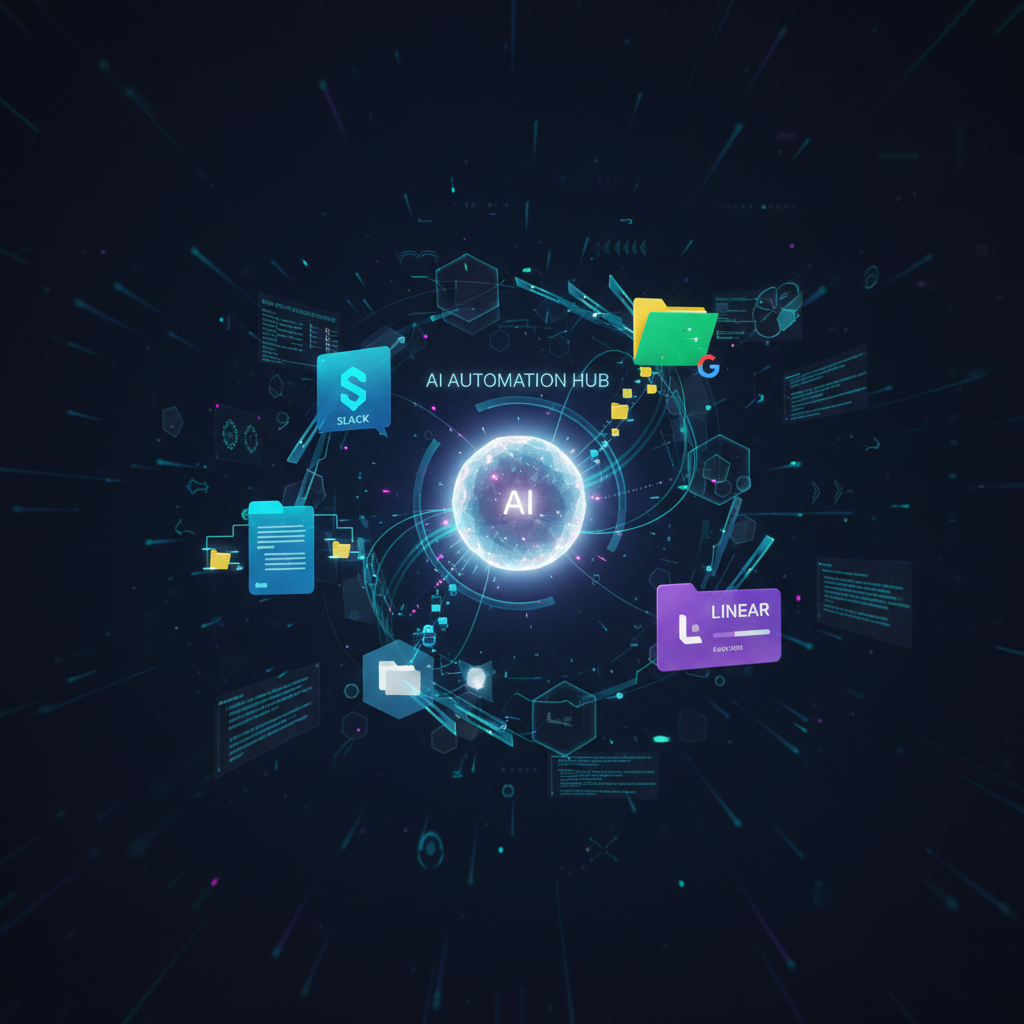
- •Connect to the tech Stack: Deep integration with tools like Slack, Linear, Google Drive, Microsoft 365, and GitHub.
- •Access cross-organization information: The agent can pull information from a document in Drive, cross-check it with a thread in Slack, and update a task in Linear.
- •Scheduling and automatic action: You can set the agent to work at fixed times (for example: "Every Thursday at 4:00 PM, summarize all development updates and send a report to managers").
How Does It Work in Practice? Examples from the Field
Let us look at a classic workflow in a sales or support team. Instead of a team member manually filtering incoming leads, they can set up an agent whose job that is. The agent will collect details from the emails, check the customer's history in the CRM, jump to the relevant channel in Slack to ask the product manager a short question, and finally update the lead in the system.
Another example is in IT and development. An agent can monitor open issues, summarize their essence from the team's internal discussions, and prepare a draft solution or a status update in Linear, which saves hours of "chasing" information.
Management and Control: The Admin Stays in the Picture
One of the biggest concerns in organizations is losing control over access to information. OpenAI addressed this through an advanced management system (Admin Console). System administrators in the organization can define exactly which tools each agent has access to, which actions it is allowed to perform (read-only or also write and update), and see full logs of the agent's actions.
In addition, the system includes built-in protections against Prompt Injection, which are attempts by external parties to divert the agent's operation through malicious content on websites the agent scans.
Bottom Line: Are We on the Way to an AI Workforce?
The announcement of Workspace Agents marks the beginning of an era in which AI is not just a personal assistant, but an integral part of the organizational workforce. The ability to build an agent once, share it with the whole team, and let it run independently is a real Game Changer for anyone looking for operational efficiency without code.
For now the service is available in preview to ChatGPT Business, Enterprise, and education (Edu) accounts. The business model is expected to change to a credit-based model (Credits) starting in May 2026, which indicates that OpenAI sees these agents as a high-value premium service.
Want to dive deeper into the topic? Here are a few relevant links: